
Hendersonville City Directory Collections
The strongest official starting point for Hendersonville city directories is the Tennessee State Library and Archives Sumner County fact sheet. It identifies a Polk’s Sumner County City Directory run, rather than claiming a separately verified historic Hendersonville series. That distinction matters. Sumner County and Hendersonville records overlap, but a county publication can cover a wider geography than the city. Keep the directory year and the wording of the title with every note.
| Collection | Years | Where Held | Access |
|---|---|---|---|
| Polk’s Sumner County City Directory | 2006–2014 | TSLA Sumner County fact sheet | Verified finding aid; confirm the physical catalog and access route |
| Locality-guide Polk description | 2006–2019 stated | Locality guide cited with the Sumner material | Later end year remains unconfirmed |
| Sumner County Newspapers, Vol. 1 and Vol. 2 | 1820–1907; 1860–1917 | TSLA finding aid and local archival research | Name indexes are identified in the fact sheet |
| Standalone historic Hendersonville directory series | Not verified before 2006 | Not listed in the inspected statewide city-directory list | Research gap, not proof that no local volume exists |
The statewide TSLA city directories list shows Nashville runs but does not establish a standalone historic Hendersonville run. A missing result from that list should lead to a catalog question, not a made-up date range. Note: preserve the difference between the verified 2006–2014 Polk run and the unconfirmed locality-guide extension.
Verified Hendersonville City Directory Years
Polk’s 2006–2014 Sumner County run is the date range that the official fact sheet supports. It can help place a named household or address in the later local record, but it does not fill the earlier decades. No official, digitized pre-2006 Hendersonville city directory, criss-cross directory, or street index was located in the research pass. Treat a claim of full historical coverage with care.
For an earlier name, use the directory as one part of a record trail. The fact sheet points to tax, probate, marriage, deed, will, newspaper, African American death-certificate, Bible, tombstone, and county-history materials. Those are separate record families with their own dates and indexes. A person can appear in one and not another because the records serve different purposes.
Hendersonville City Directory Library Leads
The Hendersonville Public Library listing places the branch at 140 Saundersville Road and gives 615-824-0656. Its listed services include public computers, Wi-Fi, copier/fax service, classes, test proctoring, laptop lending, and Wi-Fi printing. The Sumner County Libraries page also identifies the branch and its county-library connection.
Hendersonville Public Library
140 Saundersville Road
Hendersonville, TN 37075
615-824-0656
Ask staff about local papers, obituary files, vertical files, local histories, directory volumes, and genealogy services before planning a visit. The inspected official pages do not document those shelf-level holdings or a searchable surname database. That is a real research gap, not a reason to assume a subscription or a complete local collection.
Reading a Hendersonville City Directory Entry
No verified sample page from a Hendersonville volume was supplied in the research. Read the actual volume first, including its introductory pages, instead of applying symbols or formats from another city. Preserve only what is printed. The result may be useful for a name trail, but an entry by itself does not establish every person in a household or prove a present-day address.
| Printed name | Copy the spelling and initials exactly, then note variants separately. |
|---|---|
| Directory year and page | Record both so the entry can be checked in the original volume. |
| Street wording and number | Retain abbreviations, directional terms, and number as printed. |
| Cross-reference or description | Transcribe it only when the volume actually supplies one. |
| Front-matter key | Use any printed legend before interpreting abbreviations or marks. |
- Criss-cross directory
- A directory arranged by street or address when a consulted volume includes that section. No Hendersonville criss-cross run was verified.
- Householder index
- A name index organized around household heads when the publisher uses that format.
- Abbreviation key
- The volume’s own explanation of shorthand, usually found in its preliminary material or another printed guide.
Hendersonville City Records After 1969
Hendersonville’s city-history record says incorporation occurred in July 1969 and city operations began August 1, 1969. That boundary changes the search. Before city operations, a relevant address or family may be found through Sumner County, church, newspaper, deed, tax, state, or archive material rather than a municipal record. Later city material can be a useful companion, but it is not a substitute for a directory volume.
The city-history page illustrates the municipal source that marks this change in record keeping.
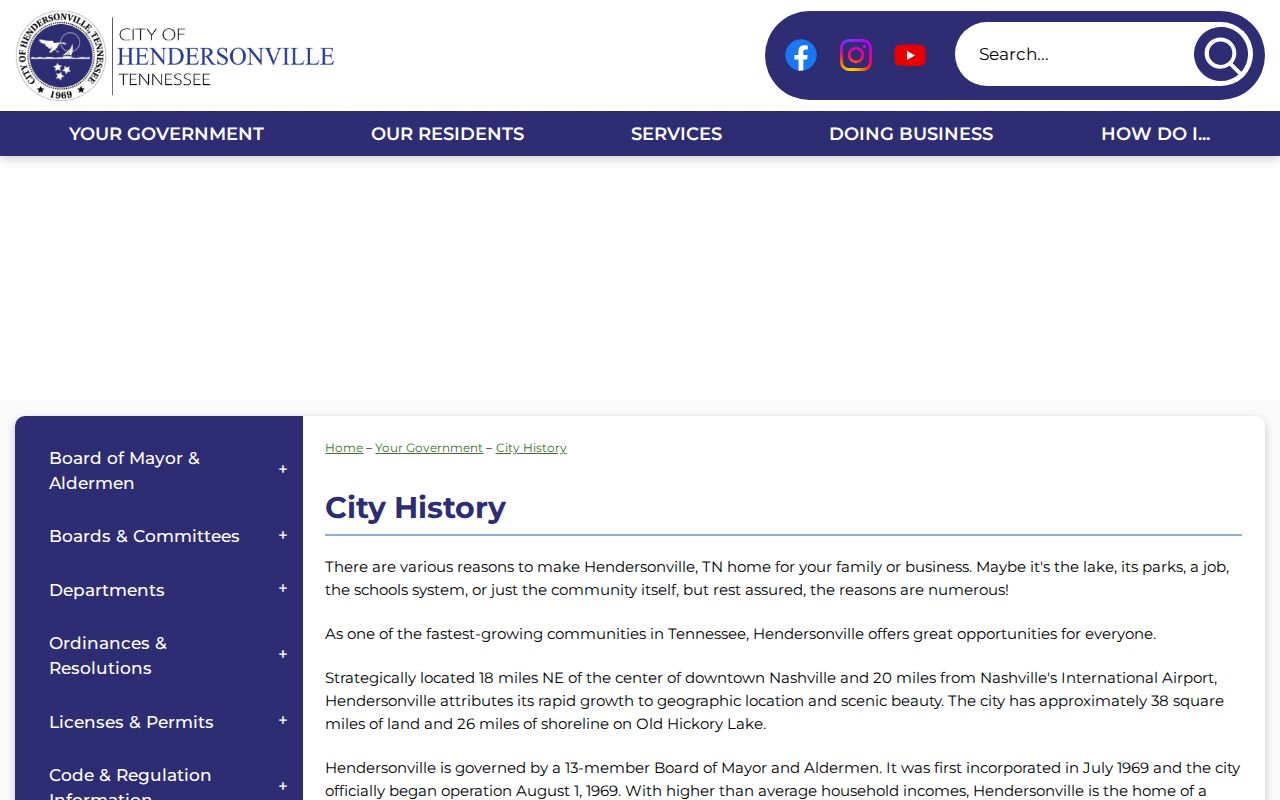
Use the incorporation date to choose a custodian, then compare the result with the date of the historical collection being searched.
Hendersonville City Directory Municipal Clues
City court and other municipal sources can help separate post-incorporation public records from historical directory research. The Hendersonville City Court page identifies a municipal court route, while the city’s record-request process is separate from county records. A court or city record should be requested through its proper custodian, not assumed to appear in the county’s historical holdings.
The City Court page is shown here as a municipal source to keep distinct from the city-directory shelf.
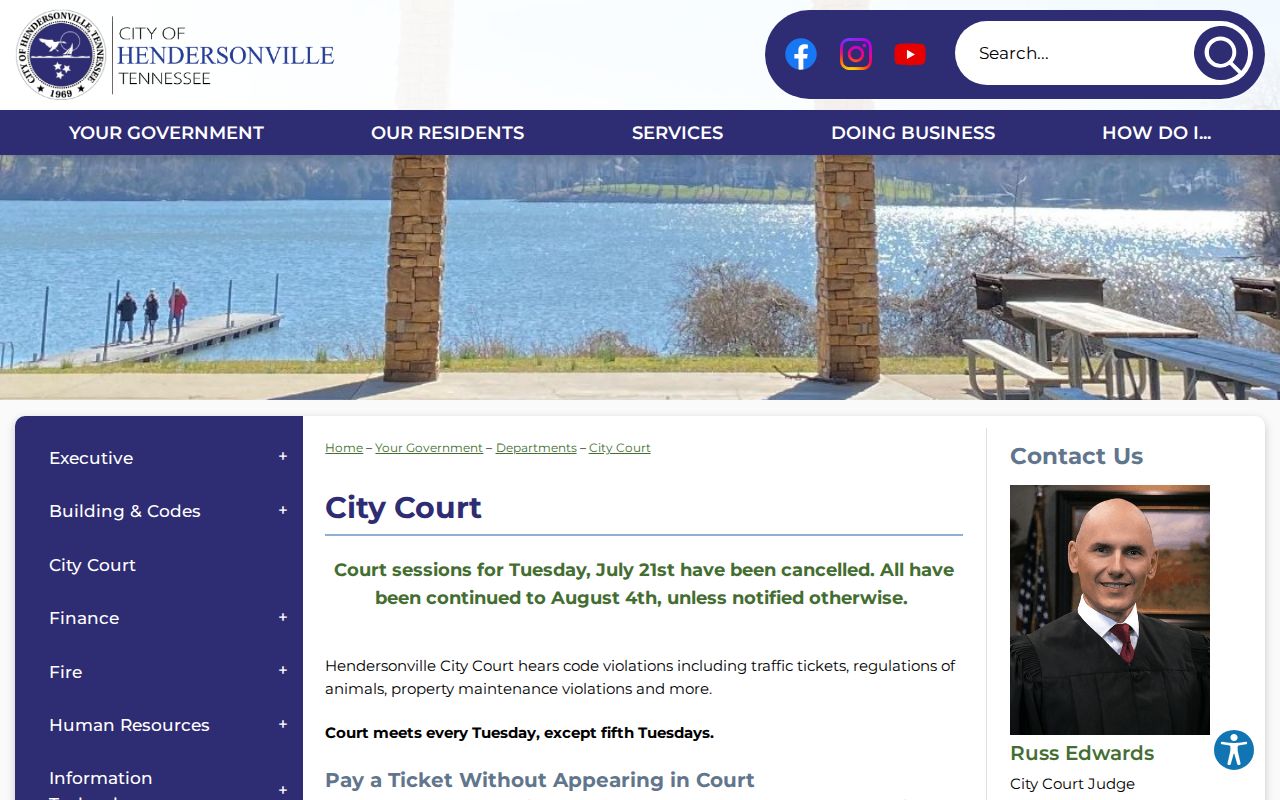
Keeping city and county sources separate reduces false gaps when a search turns up nothing in one system.
Note: city incorporation is a custodian clue, not a guarantee that every later municipal record has been digitized or indexed by name.
Hendersonville City Directory Archive Visits
Sumner Archives is at 365 N Belvedere Drive in Gallatin, reachable at 615-452-0037 or archives@sumnercountytn.gov. Its posted hours are Monday through Friday, 8:00 a.m. to 4:30 p.m., except posted holidays. The archives says each record family has its own index. There is no universal every-name database for a broad county surname search.
Bring pencils only. The posted rules prohibit bags, cameras, phones, food, drink, and reshelving. Order copies by 4:00, pay by 4:15, and plan for the machine to stop at 4:20. These steps make a local-history visit more efficient without claiming that all holdings are online.
Hendersonville City Directories and the 1878 Map
The 1878 Hendersonville map transcription is a discovery lead between a historic landmark and today’s parcel work. It can suggest a street, place, or location to test in deed books, tax material, newspapers, and the later directory record. The transcription says the map is available for copying at Sumner Archives and TSLA. Its labels do not, by themselves, make a list of residents.
The First Presbyterian Hendersonville cemetery page is another narrow historical source, documenting a church cemetery rather than a citywide burial index.
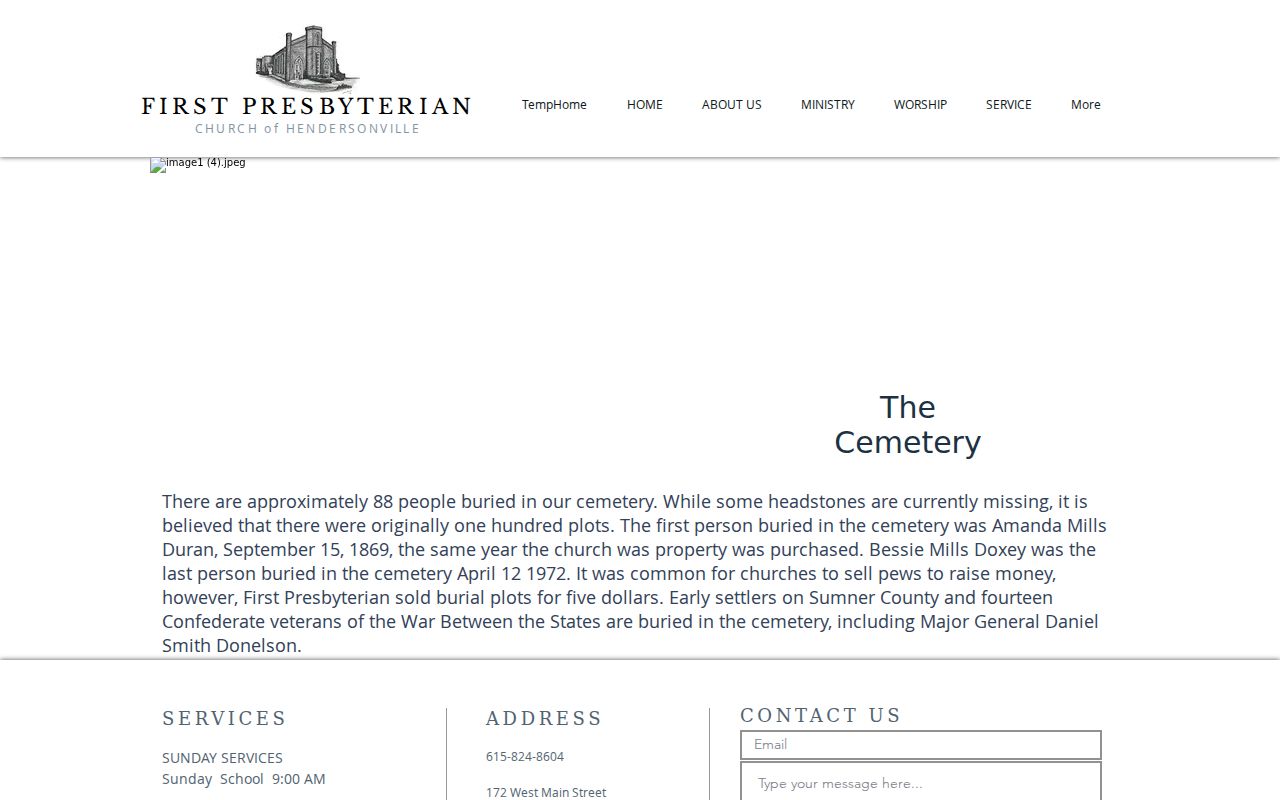
Use a cemetery, map, or newspaper reference to frame a question, then verify names, dates, and address links through the appropriate custodial record.
Hendersonville City Directory Companion Records
When the city directory shelf has a gap, use the date to select a companion record instead of trying to force a later directory into an earlier period. The TSLA fact sheet identifies probate data for 1787–1808, a tax-list name index for 1787–1794, will abstracts for 1788–1882, Will Book material for 1789–1842, a marriage index for 1787–1838, deed books for 1818–1851, and African American death certificates for 1914–1955. Each range belongs to a separate record family with different naming and access conventions.
The same fact sheet identifies newspaper volumes with name indexes, along with Bible, tombstone, and county-history material. A newspaper notice may point to a family event, while a will, probate file, deed, or vital record can test the date and relationship. Keep the source type in the citation. A transcription or index hit is a lead to the original record, not a replacement for it.
That approach makes a Hendersonville city directory search more useful when an exact volume is not immediately available. It also avoids treating a county finding aid, a map label, or a narrow cemetery page as a complete resident roll.
Tracing Hendersonville City Directory Households
A household trail begins with a verified Polk year or another held source, not an assumed full run. Record the person’s printed name, page, address wording, and every uncertainty. Then look for the same spelling in a later or earlier available volume. A change may reflect a move, a different editorial choice, or an unlisted year. It should not be treated as proof of a specific event without another record.
- Start with the directory year closest to the known Hendersonville event and capture a full citation.
- Check nearby held years for the same spelling, address wording, and any printed cross-reference.
- Pair a historical period with the appropriate federal census release, using the National Archives census access information for availability context.
- Use the relevant TSLA or Archives index for deeds, marriages, wills, probate, or newspapers when a name disappears.
- Verify a current address separately through parcel and recorded-document sources, rather than extending a historic directory entry into the present.
When a historical directory name needs modern record confirmation, use the Hendersonville resident lookup path for its separate one-person workflow. The result is a documented sequence of sources, not a guess about a family’s full story.